
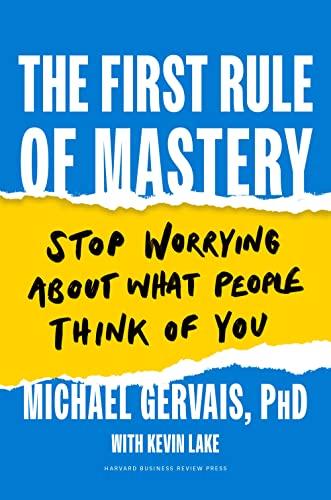
The first rule of mastery : stop worrying about what people think of you
Material type: TextPublication details: Boston : Harvard Business Review Press, ©2024Description: vi, 208 p. : ill. ; 22 cmISBN:
 - 9781647823245
- 158.1 GER-F
- BF637.S8
| Item type | Current library | Collection | Call number | Status | Date due | Barcode | Item holds |
|---|---|---|---|---|---|---|---|
 Books
Books
|
IIITD Library Corridor | Self Help | 158.1 GER-F (Browse shelf(Opens below)) | Available | 013679 |
Include bibliographical references and index.
1. Beethoven's secret
2. The mechanics FOPO
3. Fear factors
4. Identity: a breeding ground of FOPO
5. Outsourcing self-worth
6. The neurobiology of FOPO
7. Barry Manilow and the spotlight effect
8. Do we really know what someone else in thinking?
9. We see things as they we are
10. Social beings masquerading as separate selves
11. Challenges to Our closely held beliefs
12. Look who's talking
13. The litmus test
"With the proliferation of social media, the intense pressure to succeed, and our overreliance on external rewards, metrics, and validation, FOPO is running rampant. Our concern with what other people think about us has become an irrational, unproductive, and unhealthy obsession in the modern world. And its negative effects reach into all aspects of our lives. In The First Rule of Mastery, Michael Gervais shows us the key to leading a high-performance life is to redirect our attention from the world outside us to the world inside us. As one of the world's leading experts on the relationship between the mind and human performance, Gervais takes an in-depth look at the noxious effects of FOPO while laying out the mental skills and practices we need to achieve personal excellence-the same skills he's taught to the top performers in the world including sports MVPs and Fortune 100 leaders and teams. Filled with fascinating stories from the worlds of sports and business, leading-edge science, and insights from the popular Finding Mastery podcast, The First Rule of Mastery is a much-needed wake-up call that when we give more value to other people's opinions than our own, we live life on their terms, not ours"--
There are no comments on this title.